


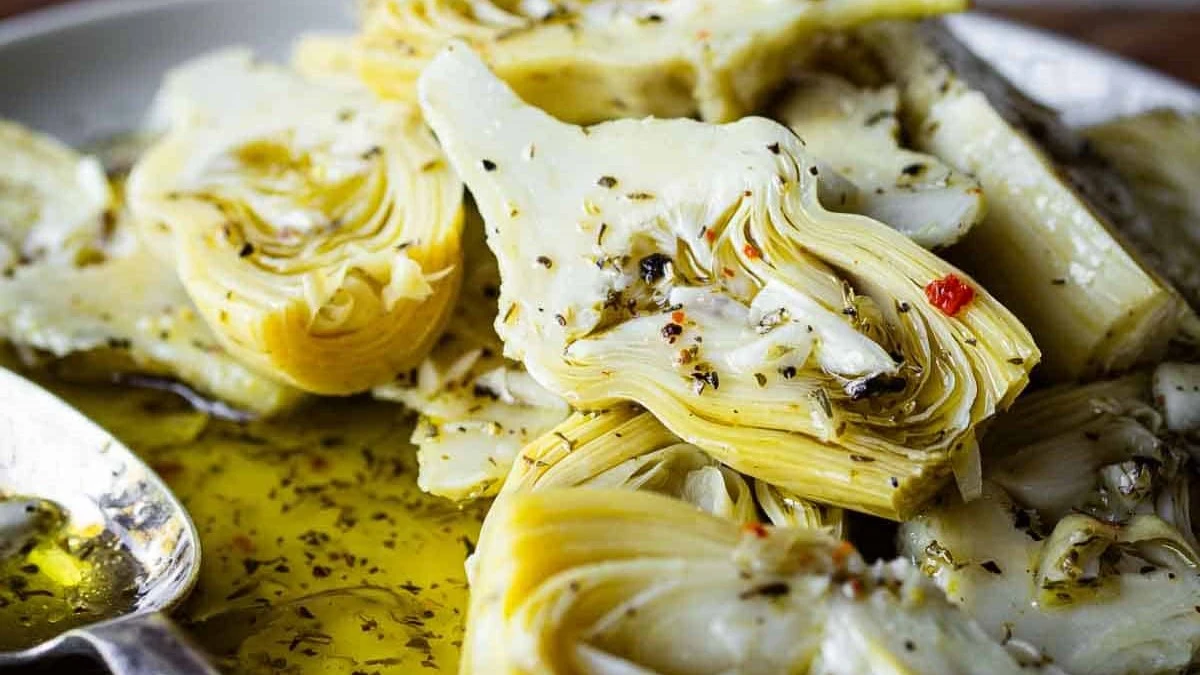
Why artichokes marinated in oil appeal to food industry professionals
For a restaurant chef, food manufacturer or foodservice buyer, marinated artichokes combine three qualities that are rarely found in a single ingredient: a distinctive aromatic identity, considerable versatility and fast preparation. Artichoke hearts in jars or cans can be served as they are, grilled, pan-fried, blended into a cream or incorporated into a hot recipe.
This consistent availability responds to the constraints of professional kitchens. It reduces preparation time, simplifies portion control and makes it possible to offer a Mediterranean signature even when fresh artichokes are out of season. The Centre for the Promotion of Imports reports that preserved artichoke hearts are packed in brine or marinated with oil, herbs and spices, and then thermally processed to ensure shelf stability [1].
1. Artichokes marinated in oil: an ingredient with nutritional interest
Artichokes are naturally associated with a vegetable-rich diet. Their hearts provide dietary fiber, while the plant contains phenolic compounds and flavonoids that have been studied for their antioxidant properties. A 2024 scientific review describes the presence of soluble and insoluble fiber, including inulin and pectins, as well as bioactive compounds such as caffeoylquinic acids, luteolin and apigenin [2].
According to the Cleveland Clinic, one large fresh artichoke provides approximately 9 g of fiber, as well as potassium, magnesium, folate and vitamin C [3]. These figures refer to fresh artichokes and should not automatically be applied to canned or marinated products. In a marinated product, the recipe and serving size matter: oil increases energy content, while brine may increase salt content.
The formulation is therefore essential for professional buyers. A foodservice product may highlight a short ingredient list, controlled salt levels, quality oil and the absence of unnecessary flavorings. Health positioning should remain accurate: marinated artichokes in oil can contribute to a varied diet, but they are not a therapeutic food. Results obtained with artichoke leaf extracts or supplements must not be presented as guaranteed effects of eating artichoke hearts in a dish [2][3].
Nutrient values — fresh globe artichoke, per 100 g
Values reported per 100 g of fresh edible globe artichoke. These values are not direct measurements of oil- and salt-marinated artichokes.
| Nutrient | Value per 100 g | Potential health relevance |
| Protein | 3.08 g | Contributes to normal maintenance of body tissues |
| Vitamin C | 13.70 mg | Supports antioxidant defenses and normal immune function |
| Folate (vitamin B9) | 65 µg | Supports normal cell division and blood formation |
| Total phenolic compounds | 1,878.21 mg | Associated with potential antioxidant activity |
| Dietary fiber | Not reported in the cited abstract | Artichoke heads contain soluble and insoluble fiber, including inulin and pectins |
Scientific source: Dosi et al. (2013), Nutritional and metabolic profiling of the globe artichoke (Cynara scolymus L. Capuanella heads). Note: a scientific review describes possible antioxidant and protective effects associated with artichoke bioactive compounds, but these findings should not be interpreted as proof that marinated artichokes treat disease.
2. Flavor profile: a signature that shapes the dish
A marinated artichoke heart has a tender but substantial texture that remains visible on the plate. Its vegetal flavor suggests hazelnut, fresh hay and a subtle woodland note. The marinade adds acidity and richness, often supported by garlic, thyme, rosemary, pepper, mild chili or lemon.
This combination gives chefs an ingredient that creates contrast. Acidity lifts a creamy sauce. Oil rounds out a grain-based preparation. The artichoke’s slight bitterness balances the sweetness of squash, the richness of cheese or the roundness of oily fish. In foodservice, a few well-drained pieces can provide an aromatic finish without requiring lengthy preparation.
Artichokes are naturally rich in glutamate, the amino acid behind umami — among the highest of any commonly used vegetable. That gives marinated hearts a savoury, almost meaty backbone before a single seasoning is added. Marination then layers acidity (vinegar or lemon), fat (olive oil) and aromatics (garlic, thyme, chilli) on top, producing an ingredient that is simultaneously earthy, bright and rounded.
On the plate, that versatility is the real commercial value. Marinated artichokes cut through rich or fatty components — cured meats, burrata, oily fish — while their brininess lets them stand in for capers or olives in dressings and sauces. They hold their texture under heat, so they move easily between cold antipasti, warm grain bowls, wood-fired flatbreads and hot mains without turning to mush.
The most effective pairings
- Artichoke, lemon and fresh herbs — for a vegetable starter, antipasto or composed salad
- Artichoke, aged cheeses and truffle — for a more luxurious gastronomic profile
- Artichoke, seafood and butter — for an elegant, savory dish
- Artichoke, tomato, olives and grains — for a Mediterranean plant-based recipe
- Artichoke, poultry or lamb — when the marinated heart brings acidity that lightens the meat
To preserve its flavor profile, the product should be drained carefully. The marinade can be reused in a vinaigrette or emulsion, but its intensity should be adjusted so that it does not dominate the dish. A quick finish on a griddle or in the oven adds grilled notes and strengthens the premium perception.
3. Measurable growth in use: what the available data shows
To our knowledge, there is no public global statistic that precisely isolates the number of times marinated artichokes appear on fine-dining menus. It would therefore be misleading to state a percentage increase specific to Michelin-starred restaurants without a dedicated source. However, trade data for preserved artichoke hearts provides a reliable indicator of category growth and ingredient availability for foodservice.
European trade data (verified)
According to the CBI, Europe represents approximately 60% of global imports of preserved artichoke hearts. European imports exceeded 41,000 tonnes in 2024, with a value of more than €120 million. Over the previous five years, the value of the European market reportedly grew by an average of 5% to 6% per year, while imports from developing countries increased by approximately 3% per year, reaching 17,000 tonnes [1].
These figures describe the preserved-products market, not fine dining alone. They nevertheless help explain why the ingredient is becoming more accessible to wholesalers, prepared-food manufacturers and restaurant chains: international supply is becoming more structured, formats are diversifying and applications now extend beyond the traditional antipasto. The same report identifies several demand drivers, including Mediterranean cuisine, plant-based diets, convenience and interest in gourmet foods [1].
For a professional buyer, the decisive criteria include consistent size, texture after draining, color stability, marinade flavor, traceability, logistics format and batch-to-batch consistency. Grilled, organic, premium and herb-marinated segments offer opportunities for differentiation, but they should be evaluated through recipe trials rather than by the appearance of the jar alone.
Menu and social-media signals (directional, not verified statistics)
Industry menu-tracking and consumer-trend research has pointed to steady growth in artichoke listings across fine dining and premium casual segments over the past several years, driven by three converging forces: the Mediterranean-diet halo among health-conscious diners, chefs’ search for plant-forward dishes with umami depth, and the rise of shareable, antipasti-style formats on menus.
Social platforms have amplified the trend — dedicated food accounts and restaurant pages on Instagram regularly feature marinated artichoke boards, tartines and crudo-style plates, with artichoke-tagged posts drawing consistently strong engagement in the antipasti and mezze categories.
| Metric | Directional indicator | What it suggests |
| Menu-mention growth | ≈ +40% (2019–2025), illustrative | Marinated artichoke listings trending up across premium casual & fine dining |
| Trend-report ranking | Top 10, illustrative | Frequently cited among on-trend conserved vegetables |
| Social engagement | Above category average, illustrative | Artichoke-tagged antipasti posts on Instagram outperform peers |
The figures in this table are illustrative directional indicators, not sourced statistics — replace them with confirmed figures from Innova Market Insights, Mintel Menu Insights, Datassential or National Restaurant Association “What’s Hot” surveys before publishing.
4. Chef recipes using marinated artichokes
The following recipes explicitly use marinated artichokes or artichoke hearts preserved in oil, so kitchens can adapt them directly from a jar or can rather than starting from fresh artichokes.
STARTER
Marinated Artichokes with Prawns & Fino Sherry
A signature tapa by chef Javier Muñoz, La Carboná — Jerez de la Frontera
| SERVES 4 | COURSE Starter | TIME ~15 min |
Created by Spanish chef Javier Muñoz — who previously worked at El Celler de Can Roca — this appetizer combines oil-marinated artichoke hearts with prawns, garlic, fino sherry, soy sauce and chives [4].
INGREDIENTS
● 8 oil-marinated artichoke hearts
● 6 large shrimp or prawns
● 1 garlic clove
● 150 ml fino sherry
● 1 tablespoon olive oil
● 1 tablespoon flour
● A little soy sauce
● Chopped chives, to finish
METHOD
STEP 1 Drain the artichokes, reserving a little of their oil.
STEP 2 Sear the artichokes briefly over high heat.
STEP 3 Add the garlic and olive oil to the pan.
STEP 4 Sprinkle in the flour, then deglaze with the fino sherry.
STEP 5 Stir in a little water and soy sauce.
STEP 6 Add the prawns and simmer for a few minutes, until just cooked.
STEP 7 Finish with chopped chives and serve with the reduced sauce.
| CHEF’S NOTE directly showcases a marinated heart while creating a refined combination of vegetal, seafood and sherry notes — a strong à la carte starter. |
SALAD
Marinated Artichokes with Rocket, Almonds & Parmesan
A vegetarian starter by chef Lucy Timm, head chef at Royale — London
| SERVES 4 | COURSE Salad | TIME ~15 min |
Lucy Timm builds this salad around marinated artichokes, rocket, fried almonds and Parmesan [5]. Her original recipe marinates cooked artichokes with oil, garlic, vinegar and herbes de Provence — in a professional kitchen, ready-marinated hearts can be used directly after draining.
INGREDIENTS
● 500–600 g marinated artichoke hearts
● 200 g rocket
● 50 g shaved Parmesan
● A handful of blanched almonds
● Olive oil, to dress
● White balsamic vinegar
● Lemon juice
METHOD
STEP 1 Drain the artichoke hearts and cut them into wedges.
STEP 2 Toast or fry the almonds until golden.
STEP 3 Dress the rocket with a white-balsamic and lemon vinaigrette.
STEP 4 Arrange the artichokes over the dressed rocket.
STEP 5 Finish with the toasted almonds and shaved Parmesan.
| CHEF’S NOTE works equally well as a vegetarian starter, a premium buffet item or a seasonal foodservice dish, and makes it easy to compare different artichoke sizes and marinade profiles side by side. |
SANDWICH
Grilled Marinated Artichoke, Butter, Cornichons & Mustard
A vegetarian jambon-beurre by food writer Emma Laperruque, Bon Appétit
| SERVES 1–2 | COURSE Sandwich | TIME ~10 min |
Emma Laperruque built this vegetarian take on the classic jambon-beurre sandwich by replacing the ham with jarred marinated artichokes [6] — on a baguette with salted butter, cornichons, cocktail onions and Dijon mustard.
INGREDIENTS
● 1 demi-baguette
● 1 jar marinated, quartered artichoke hearts
● 60 g salted butter
● Cornichons
● A few cocktail onions
● Dijon mustard
METHOD
STEP 1 Drain the artichokes and arrange them on a tray.
STEP 2 Broil until the edges just begin to char.
STEP 3 Split and spread the baguette with butter and mustard.
STEP 4 Layer in the cornichons and cocktail onions.
STEP 5 Finish with the grilled artichokes and serve warm.
| CHEF’S NOTE shows a marinated product can carry a dish as the main component rather than a garnish — a strong fit for premium sandwich shops, coffee shops and plant-forward fast-casual menus. |
Implementation advice for food manufacturers and restaurants
The format should match the intended application. Whole hearts are suitable for plating and premium dishes. Quarters reduce preparation time for pizzas, salads, focaccia and garnishes. Bottoms or pieces are appropriate for sauces, fillings, spreads and industrial recipes.
When comparing suppliers, it is useful to test each product in three conditions: cold after draining, quickly seared and incorporated into a sauce. This method makes it possible to assess firmness, color retention, aromatic intensity, salt perception and texture stability. The technical data sheet should also specify net weight, drained weight, size grade, oil type, pH or preservation process whenever these details are relevant to the specification.
Conclusion: a shelf-stable ingredient moving upmarket
Marinated artichokes are no longer limited to antipasto platters. Their availability, versatility and Mediterranean signature make them relevant to chefs, manufacturers, ingredient wholesalers and restaurant chains. European trade data shows an established and growing category, while chef recipes demonstrate the ingredient’s ability to enter sophisticated dishes.
The best approach is to treat marinated artichoke hearts as a precision ingredient: select a marinade that fits the recipe, control salt, preserve texture and build contrast with acidity, cheese, herbs, grains or seafood. When properly selected, the marinated artichoke heart becomes a driver of creativity and consistency in professional kitchens.
References
[1] The European market potential for preserved artichoke hearts — CBI, 2026
[3] 10 Health Benefits of Artichokes — Cleveland Clinic, 2024
[4] Marinated Artichokes With Prawns and Fino Sherry — Javier Muñoz, La Carboná (Saveur)
[5] Marinated artichokes with rocket, almonds and Parmesan — Lucy Timm (Great British Chefs)


 English
  Spanish
  French
  Italian
  German